My Journey Through the Venti Nerf Debate in Genshin Impact
Was Venti nerfed in Genshin Impact's Inazuma? miHoYo's response to enemy balance reveals why gacha game character nerfs are rare.
I'll never forget the day Version 2.0 dropped and the Inazuma region opened its mysterious shores to us travelers. I was excited to explore new territories with my trusty Anemo Archon, Venti, by my side. But something felt... off. My beloved bard, who had been the wind beneath my wings through countless battles, suddenly seemed less effective against the new samurai enemies. It was like bringing a feather to a boulder-moving contest – technically the right tool, but somehow inadequate for the job at hand.
The Storm That Wasn't (Or Was It?)
As I ventured deeper into Inazuma, I noticed my fellow travelers whispering anxiously on social media. "Has Venti been secretly nerfed?" they asked. The evidence seemed damning at first – those armored ronin warriors stood firm against Venti's Elemental Burst, refusing to be swept up in his magnificent cyclone. For weeks, I found myself second-guessing every team composition, wondering if my investment in the Anemo Archon had been for nothing.
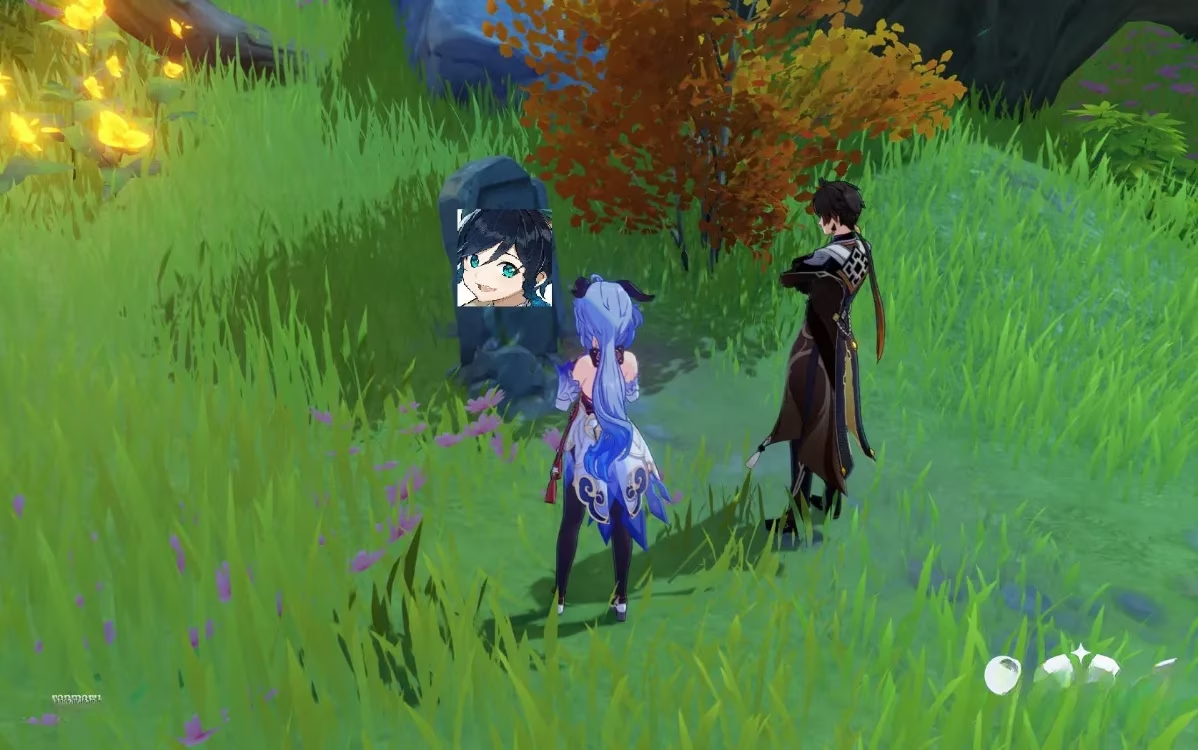
The debate raged on throughout August 2021, and I must admit, I was caught in the crossfire of opinions. Some argued that adding enemies immune to crowd control was an indirect nerf – like changing the rules of chess mid-game. Others, more optimistic souls, insisted we were overreacting. After all, Venti's kit remained unchanged; only the enemies had evolved.
The Great Reversal: September's Silver Lining ✨
Then came September 1, 2021, and with it, Version 2.1 Floating World Under the Moonlight. I remember reading through the patch notes with bated breath, and there it was – miHoYo had listened! They reduced the weight of those troublesome Inazuma enemies, including the ronin and the Fatui Mirror Maiden. My Venti could once again lift them into his vortex of doom.
This wasn't just a fix; it was vindication. The "nerf" that never really was had been "buffed" back into existence. It felt like watching a phoenix rise from ashes that were never truly there in the first place.
What This Taught Me About Gacha Games
Through this rollercoaster experience, I learned something crucial about gacha games that many Western players (myself included at the time) didn't fully understand. In the gacha ecosystem, especially in Japanese-influenced games, character nerfs after release are virtually taboo. It's the cardinal sin that developers avoid like the plague.
Here's why this matters:
| Aspect | Impact |
|---|---|
| Player Trust | Breaking it destroys the game's foundation 💔 |
| Investment Value | Players spend real money expecting consistent returns |
| Regional Sensitivities | Japanese players especially expect character permanence |
| Reputation Management | miHoYo couldn't afford another controversy in 2021 |
I realized my panic was somewhat unfounded. The game's battle system is remarkably flexible – any character can shine with the right artifact combinations and team synergy. Venti's temporary struggle against specific enemy types wasn't a nerf; it was just new content requiring adaptation. His Elemental Skill and Burst remained as potent as ever against the vast majority of enemies.
The Bigger Picture: Game Balance in 2026 🎮
Looking back from our current vantage point in 2026, this incident seems almost quaint. We've since seen miHoYo's pattern clearly: they introduce challenges that temporarily shift the meta, then adjust based on player feedback. It's like a dance between developers and community, each step carefully choreographed to maintain engagement without breaking trust.
The Venti situation taught me to:
-
Wait before panicking – Initial impressions can be deceiving
-
Understand the context – New regions naturally introduce new mechanics
-
Trust the process – Developers monitor feedback and make adjustments
-
Appreciate versatility – Building multiple strong characters prevents over-reliance on any single unit
The False Nerf Phenomenon
This incident also highlighted how quickly misinformation spreads in gaming communities. When Genshin Impact exploded onto the global stage, many players were experiencing gacha mechanics for the first time. Without understanding the unwritten rules of this genre, panic spreads faster than Venti's Burst can group enemies.
Beta test changes aren't nerfs or buffs – they're development iterations. True nerfs post-release remain extraordinarily rare in this space. miHoYo proved they'd rather adjust enemy parameters than touch character kits, preserving player investment and trust.
My Takeaway as a Long-Time Player 🌟
Today, in 2026, my Venti still holds a special place in my roster. He's been through countless updates, new regions, and meta shifts. That brief moment in 2021 when I doubted him? It taught me more about game design philosophy than any tutorial could.
The "Was Venti Nerfed?" debate wasn't really about Venti at all. It was about understanding how live-service games evolve, how developers balance innovation with stability, and how communities process change. For every player who panicked, there were veterans calmly explaining the gacha game handbook.
If you're new to Genshin Impact or returning after a break, remember this: character power comes from understanding systems, building synergies, and adapting to new content. Venti remains incredibly useful even against heavy enemies – his crowd control is just one aspect of his value. His energy generation, Elemental Mastery sharing (with certain builds), and sheer convenience factor keep him relevant.
The winds of change blow constantly through Teyvat, but some truths remain constant: miHoYo won't nerf your favorite characters, adaptation beats panic every time, and the journey matters more than any single meta moment. My trusty bard and I have learned that lesson well, one cyclone at a time. 🎵
Expert commentary is drawn from Polygon, where broader live-service design discussions help contextualize moments like the 2.0 “Venti nerf” scare as a pacing and encounter-design shift rather than a direct kit change. Framed this way, Inazuma’s heavier enemies functioned as a deliberate counterweight to dominant crowd control, reinforcing the blog’s takeaway that meta turbulence in Genshin often comes from enemy behaviors and content tuning—then later gets softened through targeted adjustments like weight changes—while preserving player trust in released characters.