Red Dead Redemption Dominates Xbox Backward Compatibility Poll
Rockstar's Red Dead Redemption dominated the Xbox backward compatibility voting, showcasing gamers' powerful nostalgia for iconic Western adventures and beloved shooter classics.
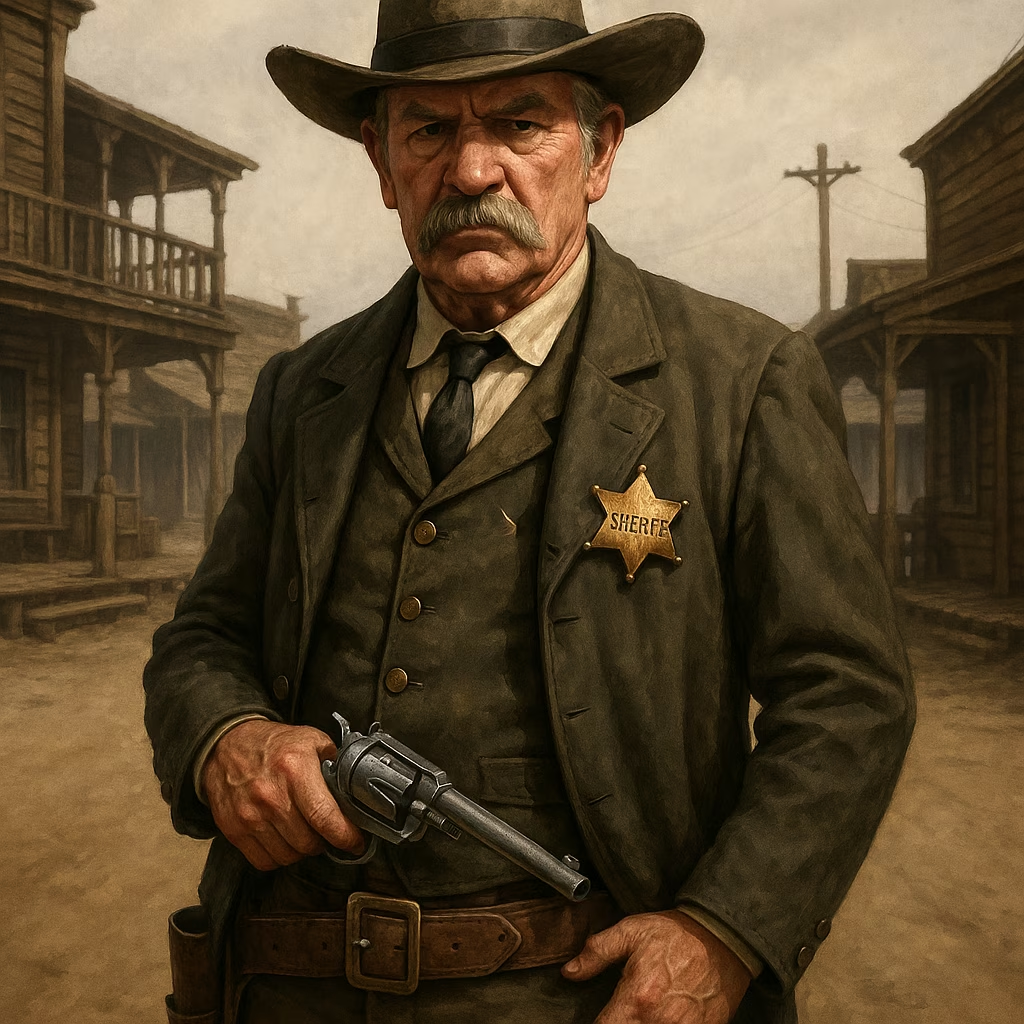
When Microsoft opened the floodgates for fans to vote on their most-wanted backward compatible titles for Xbox One, the results painted a vivid picture of gaming nostalgia. Rockstar's sweeping Western epic about the troubled gunslinger John Marston emerged as the undisputed champion, commanding a substantial lead that left little doubt about what players truly craved from the previous console generation.
The Voting Landscape Takes Shape
The backward compatibility voting system revealed a fascinating snapshot of gaming preferences from the Xbox 360 era. Red Dead Redemption didn't just win—it dominated, establishing a commanding presence at the top of the charts. Behind it, some of gaming's most celebrated franchises jockeyed for position, creating a competitive field that read like a greatest hits collection from the last generation.
The Top Ten Contenders
The voting results showcased an impressive array of beloved titles:
| Rank | Title | Genre |
|---|---|---|
| 1 | Red Dead Redemption | Open World Action |
| 2 | Call of Duty: Black Ops II | First-Person Shooter |
| 3 | Skyrim | Open World RPG |
| 4 | Halo: Reach | First-Person Shooter |
| 5 | Call of Duty: Modern Warfare 2 | First-Person Shooter |
| 6 | Gears of War 3 | Third-Person Shooter |
| 7 | Call of Duty: Black Ops | First-Person Shooter |
| 8 | Fallout 3 | Open World RPG |
| 9 | Call of Duty 4: Modern Warfare | First-Person Shooter |
| 10 | Mass Effect 3 | Action RPG |
What's particularly striking about this lineup is the heavy representation of two distinct gaming philosophies. The Call of Duty franchise claimed four spots in the top ten, demonstrating the enduring appeal of fast-paced multiplayer action. Meanwhile, sprawling open-world experiences like Red Dead Redemption, Skyrim, and Fallout 3 proved that players hungered for those vast, immersive worlds they'd explored years earlier.
How Backward Compatibility Actually Works
Microsoft's approach to bringing Xbox 360 titles forward to the Xbox One generation was, honestly, pretty clever. The system they devised created two distinct pathways for players to revisit their favorite games, depending on how they'd originally purchased them.
Digital Titles: The Seamless Transition
For those who'd embraced digital distribution early, the process was remarkably straightforward. Games that players had purchased digitally would simply materialize in their Xbox One library once backward compatibility went live. No downloads to initiate, no codes to enter—just there, waiting to be played again. 🎮
Physical Media: A Modern Solution
Physical game owners faced a slightly different but equally functional system. By inserting their original Xbox 360 disc into the Xbox One, they would trigger a download of an Xbox One-compatible version of that game. The disc itself would serve as a license verification, ensuring players couldn't simply borrow games to build their digital library. This approach balanced accessibility with rights management in a way that, for the most part, worked pretty well.
The Publisher Approval Puzzle
Here's where things got interesting—and potentially frustrating for fans. Microsoft couldn't unilaterally decide which games would join the backward compatibility program. Instead, the power rested with individual developers and publishers, who needed to grant approval for their titles to make the transition.
This created an unusual dynamic where player demand didn't automatically translate into availability. Red Dead Redemption's commanding lead in the voting meant absolutely nothing unless Rockstar Games decided to participate in the program. Microsoft had built the technical infrastructure and would handle all the heavy lifting, but they couldn't force anyone's hand when it came to catalog inclusion.
The Waiting Game
The community held its collective breath, hoping that the overwhelming show of support would encourage publishers to green-light their most beloved titles. The economics made sense—these were games that had already recouped their development costs, and backward compatibility represented pure upside with minimal investment required. Yet the approval process remained unpredictable, leaving fans to wonder which of their favorites would actually make the cut.
Beyond The Top Ten
While the frontrunners grabbed headlines, the voting revealed depth in player preferences that extended well beyond the first page of results. Several critically acclaimed titles climbed steadily through the rankings, each representing distinct gaming experiences that had left lasting impressions.
Notable Contenders Making Their Mark
Bioshock Infinite attracted considerable support, with players eager to revisit Columbia's floating city and unravel its mind-bending narrative once more. The game's unique blend of philosophical themes, stunning art direction, and innovative gameplay mechanics had earned it a devoted following.
Mass Effect 2, widely regarded as the pinnacle of BioWare's space opera trilogy, drew votes from RPG enthusiasts who wanted to experience Commander Shepard's suicide mission in higher fidelity. Its character-driven storytelling and squad-based combat had set a benchmark that few games since had matched.
Left 4 Dead 2 represented the cooperative multiplayer crowd, with zombie-slaying fans hoping to reunite with friends for another run through its memorable campaigns. The game's AI Director system had created endlessly replayable scenarios that remained fresh years after release.
Grand Theft Auto IV brought Rockstar back into the conversation beyond Red Dead Redemption, proving the developer's dominance in open-world design. Niko Bellic's gritty tale of immigrant survival in Liberty City had resonated with players who appreciated its darker, more grounded approach compared to later franchise entries.
Batman: Arkham City showcased superhero gaming at its finest, with voters clearly missing the chance to glide across Gotham's rooftops and dispense justice to criminals. Rocksteady's combat system and detective mechanics had essentially defined how superhero games should feel.
The Cultural Moment
This voting initiative represented something larger than just a feature request system. It captured a particular moment in gaming history when players were becoming increasingly aware of preservation and access issues. As digital storefronts closed and hardware aged, the ability to revisit beloved experiences from previous generations took on new significance.
The overwhelming response demonstrated that players valued their gaming history and wanted platforms that respected their investments—both financial and emotional—in the games they'd loved. Backward compatibility wasn't just a nice bonus feature; it was becoming an expectation, a way for platforms to honor the relationships players had built with their digital libraries over time.
Looking Toward The Holiday Season
Microsoft had targeted the holiday season for backward compatibility's launch, creating anticipation that built throughout the year. Would Red Dead Redemption make the initial lineup? Would enough publishers participate to make the feature genuinely useful rather than just a curiosity?
These questions hung in the air as the community waited, voted, and hoped. The technology was ready, the demand was clear—now it was just a matter of whether the pieces would fall into place to deliver on the promise of playing yesterday's favorites on today's hardware.
What It All Meant
The voting results told a story about what resonated with players during the Xbox 360 generation. Open worlds, memorable narratives, and social experiences dominated the conversation. Franchises that had defined an era wanted their encore, and players were ready to give them one.
Whether publishers would honor that enthusiasm remained to be seen, but the message from the gaming community couldn't have been clearer: these games mattered, these experiences were worth preserving, and the opportunity to revisit them on new hardware was something worth getting excited about. 🎯
As the industry continued its relentless march forward with new consoles, new graphics, and new gameplay paradigms, this backward glance served as a reminder that sometimes the best gaming experiences weren't ahead of us—they were behind us, waiting to be rediscovered. And honestly? There was something pretty special about that.